
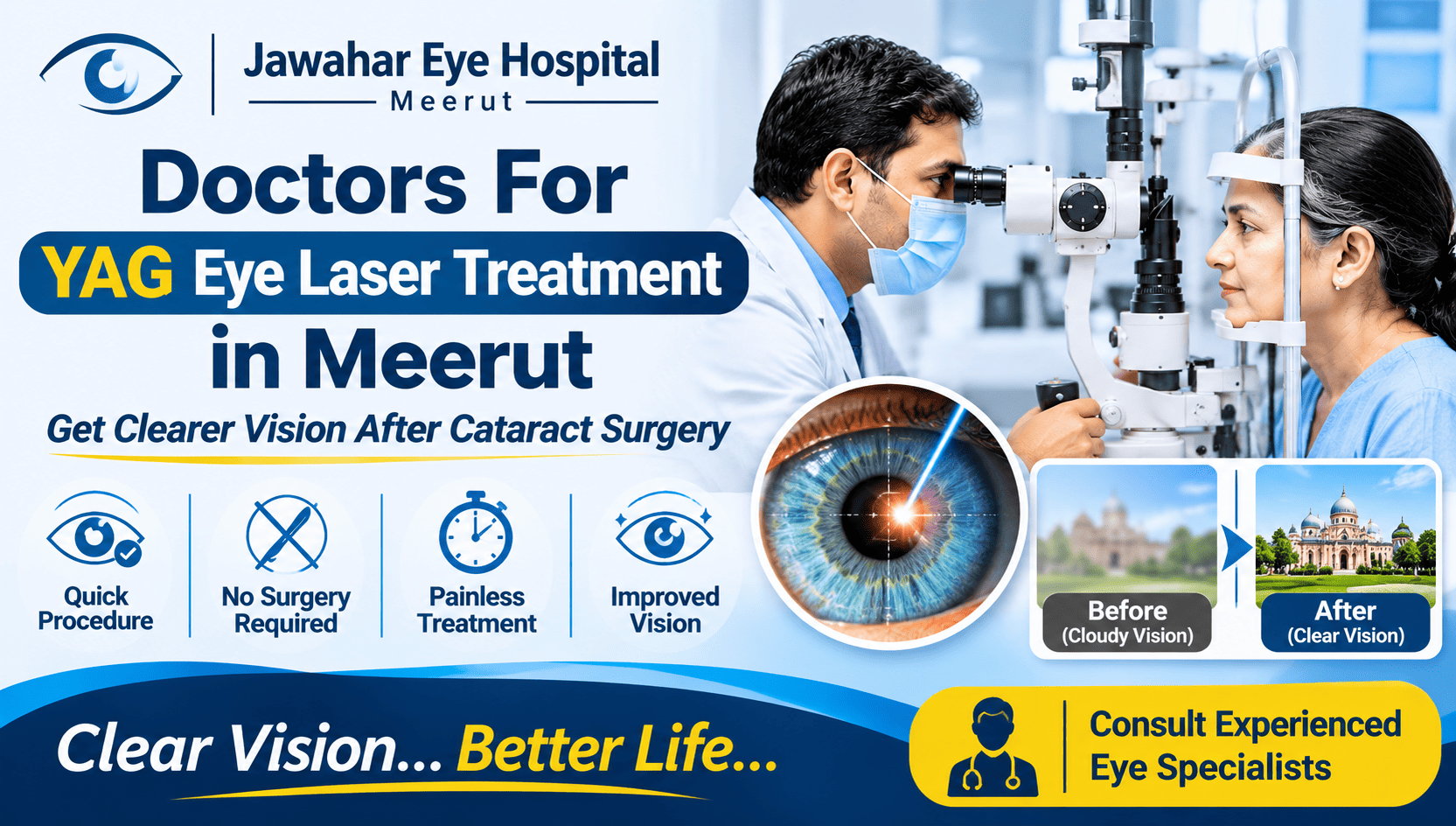
Have you noticed that your vision has become blurry again, even after undergoing successful cataract surgery? Do things appear cloudy, or do you feel as if you are looking through a thin layer of fog? These changes can sometimes occur because of a condition called Posterior Capsular Opacification (PCO).
The good news is that this condition can often be treated with a quick laser procedure known as YAG Laser Capsulotomy.
If you are searching for experienced Doctors For YAG Eye Laser Treatment in Meerut, Jawahar Eye Hospital offers eye care consultation and guidance for patients experiencing vision problems after cataract surgery. Under the guidance of Dr. Umang Varma, patients can seek an eye evaluation and learn about suitable treatment options.
Let’s understand what YAG laser treatment is, why it is needed, and when you should consult an eye specialist.
What Is YAG Laser Eye Treatment?
YAG laser treatment, also known as Nd Laser Capsulotomy, is a procedure commonly performed to treat Posterior Capsular Opacification (PCO).
During cataract surgery, the cloudy natural lens is removed and replaced with an artificial intraocular lens (IOL). A thin natural membrane behind the artificial lens is usually left in place to support the implant.
Sometimes, this membrane becomes cloudy over time. As a result, patients may experience blurred vision, glare, or difficulty seeing clearly.
YAG laser treatment creates a small opening in this cloudy membrane using a specialised laser. This allows light to pass through more clearly and can help restore vision.
Importantly, YAG laser treatment does not remove or replace the artificial lens. It addresses clouding behind the lens.
Why Is YAG Laser Treatment Needed After Cataract Surgery?
Many patients believe that once cataract surgery is completed, their eyesight will remain clear permanently. However, some patients develop PCO months or even years after their operation.
PCO is sometimes called a secondary cataract, although it is not a new cataract.
Common reasons for requiring YAG laser treatment include:
- Blurred or cloudy eyesight after cataract surgery.
- Difficulty reading or recognising objects clearly.
- Increased sensitivity to bright lights.
- Glare while driving, especially at night.
- Reduced clarity when watching television.
- A gradual decline in vision after initially successful cataract surgery.
If you notice these symptoms, an eye examination can help identify whether PCO or another eye condition is responsible.
Common Symptoms of Posterior Capsular Opacification (PCO)
PCO does not affect everyone who undergoes cataract surgery. However, when it develops, it can interfere with daily activities.
Some common symptoms include:
1. Blurred Vision
Objects may appear unclear, making reading, working, and other routine activities difficult.
2. Cloudy or Hazy Eyesight
You may feel as though a thin fog or film is covering your vision.
3. Glare and Light Sensitivity
Bright sunlight, vehicle headlights, and other strong light sources may become uncomfortable.
4. Difficulty Driving at Night
Headlights and streetlights may appear brighter or more distracting than before.
5. Reduced Visual Clarity
You may notice that your eyesight is not as sharp as it was immediately after cataract surgery.
If you experience sudden vision loss, flashes of light, a sudden increase in floaters, or a curtain-like shadow, seek urgent eye care rather than assuming it is PCO.
How Is YAG Laser Capsulotomy Performed?
YAG laser capsulotomy is generally a short outpatient procedure. It does not usually require a surgical incision or stitches.
Here is what patients can generally expect:
Step 1: Eye Examination
The ophthalmologist examines your eyes and checks whether posterior capsular opacification is affecting your vision. Other possible causes of blurred vision are also evaluated.
Step 2: Preparation of the Eye
Eye drops may be used to dilate the pupil. Additional drops may be applied depending on the patient’s condition.
Step 3: Laser Treatment
You will sit in front of a specialised ophthalmic laser machine. The doctor uses focused laser energy to create a small opening in the cloudy posterior capsule.
Step 4: Post-Treatment Monitoring
Your eye pressure and vision may be checked after the procedure. The doctor may prescribe eye drops or recommend a follow-up examination.
Most patients can return home on the same day, although their vision may remain temporarily blurry because of the dilating drops or floating capsule fragments.
Is YAG Laser Eye Treatment Painful?
One of the most common questions patients ask is whether YAG laser treatment causes pain.
In most cases, the procedure is painless or causes very little discomfort. Patients generally remain awake throughout the treatment.
You may notice brief flashes of light during the procedure, but significant pain is not usually expected.
If you experience discomfort or unusual symptoms, inform your ophthalmologist.
What Are the Benefits of YAG Laser Treatment?
For patients diagnosed with PCO, YAG laser capsulotomy can provide several benefits:
- Helps improve vision affected by PCO.
- No traditional surgical incision is required.
- Usually completed within a short appointment.
- Generally does not require hospital admission.
- No stitches are normally needed.
- Can reduce glare and cloudy vision caused by PCO.
- Most patients can resume routine activities relatively soon, following their doctor’s advice.
The improvement in eyesight depends on overall eye health and whether other conditions are affecting vision.
Are There Any Risks of YAG Laser Treatment?
YAG laser capsulotomy is generally considered a safe procedure when performed for appropriate patients. However, like other medical procedures, it has some potential risks.
These may include:
- Temporary increase in eye pressure.
- Floaters in the field of vision.
- Inflammation inside the eye.
- Damage or pitting to the artificial lens.
- Retinal tear or retinal detachment, which is uncommon but important.
Your ophthalmologist will evaluate your eye condition and explain the potential benefits and risks before recommending treatment.
Who Should Consider YAG Laser Treatment?
YAG laser treatment may be recommended for patients who:
- Have undergone cataract surgery in the past.
- Have developed posterior capsular opacification.
- Experience blurred or cloudy vision due to PCO.
- Have difficulty with everyday activities because of reduced vision.
- Have been advised by an ophthalmologist to undergo laser capsulotomy.
Not every patient with blurred vision after cataract surgery needs YAG laser treatment. A proper examination is necessary before deciding on the procedure.
Finding the Right Doctors For YAG Eye Laser Treatment in Meerut
Choosing the right eye specialist is important when dealing with vision-related problems.
If you are looking for Doctors For YAG Eye Laser Treatment in Meerut, consider a hospital where your eyes can be properly examined and your treatment options clearly explained.
Before proceeding with treatment, you should consider:
- Experience in diagnosing and managing post-cataract surgery complications.
- Availability of appropriate diagnostic equipment.
- Access to modern ophthalmic laser technology.
- Proper evaluation of retinal health and eye pressure.
- Clear instructions about treatment and follow-up care.
A detailed consultation helps ensure that the recommended procedure is appropriate for your individual eye condition.
YAG Laser Eye Treatment at Jawahar Eye Hospital, Meerut
Jawahar Eye Hospital, Meerut, provides eye care consultation for patients seeking treatment and guidance for different vision-related conditions.
Associated with Dr. Umang Varma, the hospital aims to help patients understand their eye health concerns and available treatment options.
Patients experiencing cloudy or blurred vision after cataract surgery can seek an eye examination to determine whether Posterior Capsular Opacification is present.
If YAG laser capsulotomy is clinically appropriate, the ophthalmologist can explain the procedure, expected results, precautions, and follow-up requirements.
Whether you have questions about cataract surgery, laser vision correction, or changes in your eyesight, getting the right medical advice is an important step towards protecting your vision.
Book an Eye Consultation at Jawahar Eye Hospital
Do not ignore changes in your eyesight after cataract surgery. Cloudy vision may be related to PCO, but only a proper eye examination can identify the actual cause.
If you are searching for Doctors For YAG Eye Laser Treatment in Meerut, contact Jawahar Eye Hospital to enquire about an eye consultation.
Consult Dr. Umang Varma at Jawahar Eye Hospital, Meerut, and get professional guidance for your eye health.
Take the right step towards clearer vision.
Frequently Asked Questions About YAG Laser Eye Treatment
1. What is YAG laser treatment for eyes?
YAG laser capsulotomy is a procedure used to treat posterior capsular opacification (PCO), a condition in which the membrane behind an artificial lens becomes cloudy after cataract surgery.
2. Is YAG laser treatment the same as cataract surgery?
No. Cataract surgery removes the cloudy natural lens and replaces it with an artificial lens. YAG laser treatment addresses clouding of the membrane behind that artificial lens.
3. How long does YAG laser treatment take?
The actual laser procedure generally takes only a few minutes, although preparation, examination, and post-treatment monitoring may take additional time.
4. Is YAG laser treatment safe?
YAG laser capsulotomy is generally safe when performed for suitable patients. However, possible complications include increased eye pressure, inflammation, floaters, and rare retinal problems.
5. Can eyesight improve after YAG laser treatment?
Yes. Many patients experience clearer vision when PCO is the main cause of their blurred eyesight. The final result depends on the health of the retina, optic nerve, and other eye structures.
6. Does PCO develop in every cataract patient?
No. Some patients develop PCO after cataract surgery, while others never experience it. It can appear months or years after surgery.
7. Where can I consult a doctor for YAG eye laser treatment in Meerut?
You can contact Jawahar Eye Hospital, Meerut, to enquire about an eye examination and consultation with Dr. Umang Varma for post-cataract vision problems.
8. Can YAG laser treatment be repeated?
In selected cases, repeat treatment may be considered if clinically necessary. The ophthalmologist must first examine the eye and determine the cause of persistent or recurring symptoms.


